

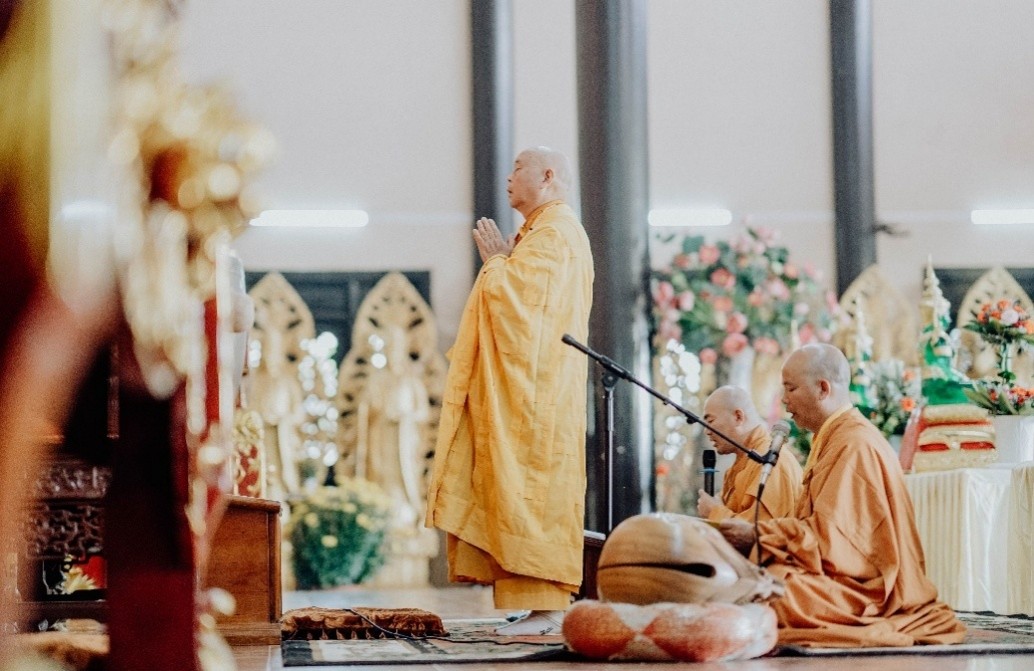
One of the most noteworthy changes in the religious makeup of Australia and New Zealand is the growth in Buddhism over the past few decades, driven partly by migration from Asia and partly by conversion among people of no prior religious background. Here are the numbers:
Australia: According to census data, there were approximately 140,000 people (0.8% of the population) who identified as Buddhist in 1991. By the of the 2021 census, this number had risen to 615,800, or 2.4% of the population.
New Zealand: Around 12,700 people (0.4% of the population) identified as Buddhist in 1991, rising to 52,779 (1.1% of the population) according to the 2023 census.
This means that we are increasingly likely to encounter people who are deeply influenced by Buddhist beliefs. As Christians who are called to share the love of Christ with people from all backgrounds, we should therefore seek to equip ourselves to minister the gospel to people from this background. This is obviously a huge topic, but I trust that I will be able to sketch some basic points of departure in this article.
Before we continue, it is worth noting that it can be hard to pin down what Buddhism is. Those who describe themselves as Buddhist embrace a bewildering variety of beliefs, practices and rituals, spread across three major traditions (Theravada, Mahayana and Vajrayana) and countless local expressions. It may therefore be helpful to think of it as a ‘family of religions’ rather than as a unified, monolithic religion. It is also worth noting that some Buddhists are uneasy with the label itself. They point out that ‘Buddhism’ is a term coined by Western scholars, and that practitioners are more likely to describe themselves as following ‘the Dharma’ or ‘the Way’. However, for the sake of simplicity, we will stick with using the word Buddhism for the rest of this article.
While acknowledging the wide diversity in beliefs and practices within Buddhism, there are certain things that most within this broad movement would be able to identify (although there will of course be exceptions):
The Buddha and the Question of the Divine: Buddhism traces its origins to Siddhartha Gautama, who lived in the sixth to fifth century BC and became known as ‘the Buddha’ (the Enlightened One) after attaining spiritual awakening. Unlike Hinduism, classical Buddhism does not centre on a creator God or gods. Theravada Buddhism, the tradition dominant in Sri Lanka and Southeast Asia, is often described as non-theistic, treating the Buddha as a supreme teacher rather than a deity. Mahayana Buddhism, however, developed rich devotional traditions in which the Buddha and various Bodhisattvas (beings who have delayed their own final liberation to help others) are venerated in ways that can look, in practice, remarkably like the worship of the gods in other religions.
Reverence for Sacred Texts: Buddhism does not have a single sacred book like the Bible or Qur’an. Instead, each tradition has its own extensive canon. Theravada Buddhists look to the Pali Canon (Tipitaka), a vast collection of the Buddha’s discourses, monastic rules and philosophical analysis. Mahayana Buddhists additionally revere a wide range of sutras, such as the Lotus Sutra and the Heart Sutra, some composed centuries after the Buddha’s death. Most ordinary Buddhists will not have read these texts directly, but they shape teaching, chanting and worship at the local temple.
Dukkha, Anatta, Samsara and Nirvana: These four linked concepts are central to the way in which Buddhists think about life and death. Dukkha is the Buddha’s foundational diagnosis of existence: that all life is marked by suffering, dissatisfaction or unease, caused by craving and attachment. Samsara refers to the endless cycle of rebirths all beings are subjected to according to Buddhist teaching, driven onward by karma, the accumulated weight of past actions. Unlike Hinduism, classical Buddhism denies that there is a fixed, eternal self (anatta, ‘no-self’) that passes from life to life; what continues is better described as a causal stream of consciousness, like a flame passed from one candle to the next. The goal is liberation from this cycle altogether, a state of the complete extinguishing of craving and suffering known as Nirvana. (As with karma and reincarnation among Hindus, the fact that most Australians and New Zealanders have at least a passing familiarity with these concepts illustrates how deeply Buddhist ideas have penetrated Western cultural consciousness through mindfulness culture and the New Age Movement.)
Following the Eightfold Path (the Middle Way): The Buddha taught that liberation from suffering is found by walking the Eightfold Path, a set of disciplines traditionally grouped into three broader categories. These include:
- Wisdom: right view and right intention
- Ethical conduct: right speech, right action and right livelihood
- Mental discipline: right effort, right mindfulness and right concentration
This is described as the ‘Middle Way’, a path of disciplined moderation between self-indulgence and extreme asceticism, and it is meant to be walked over many lifetimes.
Taking Refuge in the Three Jewels: Becoming a Buddhist, in traditional terms, means ‘taking refuge’ in the Three Jewels: the Buddha (the teacher), the Dharma (his teaching) and the Sangha (the community, especially the monastic community). Buddhists believe that the monastic Sangha carries a particular duty and dignity, and that supporting monks and nuns through acts of merit-making (almsgiving, temple donations, ritual observance) is one of the primary ways in which lay people improve their karma. This is one of the central structuring ideas of Buddhist community life across most Buddhist-majority cultures.
It should be clear from this incomplete list of Buddhist beliefs that several of them are fundamentally at odds with biblical teaching. These include the absence (in most traditions) of a personal, transcendent Creator God, the denial of a stable, enduring self, made in God’s image, the belief that humans will go through multiple rebirths, and the commitment to attaining liberation through one’s own disciplined effort across countless lifetimes. It is therefore vital that we present the life-giving, gracious message of our utterly unique Saviour to Buddhist people.
As with any kind of gospel witness, we need to carefully think through both the content of the message we will be sharing and the way in which we should share it. We will start by considering attitudes and approaches before briefly looking at the content of our gospel proclamation.
Prioritise Relationships: People from a Buddhist background have a lot of rethinking to do when they encounter the message of Jesus. It is best that this is done within the context of an open, trusting relationship with Christians who are not only able to explain the gospel, but who are also committed to showing the love of Christ in acts of kindness and friendship.
Seek to Understand: When we witness to Muslims or Orthodox Jews, we will in most cases have a very good idea of what the person we are speaking to believes, and what questions and objections they are likely to raise. Because of the enormous diversity within Buddhism, this is often not true for Buddhist people. A person raised in a Theravada village in Sri Lanka, a Tibetan Vajrayana family, and a Western convert who found Buddhism through a meditation app may hold quite different beliefs while all calling themselves Buddhist. It is also worth remembering that in many Buddhist-majority cultures, Buddhist practice sits alongside folk religion, ancestor veneration and animistic beliefs about spirits. It is, therefore, very important that we seek to know people and understand their actual, sometimes highly idiosyncratic, belief systems. This will enable us to better articulate the gospel and answer possible objections.
Be Patient: Buddhism can be an all-encompassing worldview, a community, and a culture, all rolled into one. Considering the gospel, therefore, brings with it not only the truth-claims of Christ but also questions about a possible loss of identity and the fracturing of relationships. It may take a lot of time, and many conversations, to work through all of these questions. So, be prepared to be in it for the long haul, and to seek answers (perhaps particularly from Christians with a Buddhist-background heritage) if you struggle to answer some of them.
Make Use of Stories and Parables: Many ordinary Buddhists encounter their tradition’s teaching primarily through stories, such as the Jataka tales of the Buddha’s previous lives. As Christians, we can make use of the opportunity to ‘tell a better story’ by finding ways to retell the key stories of the Bible in ways that resonate with a Buddhist background. Of course, Christ himself made use of stories in the form of parables to bring home his message (Matthew 13:34). These can be used to communicate key gospel truths in ways that address some of the key questions asked by Buddhist people.
Be Prepared to Say Some ‘Hard but True’ Things: The gospel will always have within it an element of offence, as it challenges us in our conviction that we can make our own way into eternity. Depending on existing beliefs, people will often struggle with different aspects of the Christian message. In the case of people from a Buddhist background, some truths may be hard to hear and will have to be patiently and respectfully (cf. Col 3:15–16) explained:
- There is a personal, transcendent Creator God who can be known, not merely an impersonal law or process (Gen 1:1; Acts 17:24–27; Rom 1:19–20)
- Being human not an illusion or a passing stream of causes, but were made in God’s image with an enduring soul that is deeply loved by him (Gen 1:27; Ps 139:13–14)
- Even our best efforts to improve our eternal prospects are doomed to failure (Isa 64:6; Rom 3:10–12; Eph 2:8–9)
- Human beings will not get multiple chances to ‘get it right’ but will face judgement after death (Heb 9:27; 2 Cor 5:10)
- Christ is utterly unique, not just another enlightened teacher among many (John 14:6; Acts 4:12; Col 1:15–20)
- The cross and the empty grave were the most important events in human history and were actual historical events (1 Cor 15:3–8; Luke 24:1–7; Rom 5:6–8)
One of the key convictions of Buddhist belief is that all of life is marked by dukkha, an unrelenting suffering born of craving and attachment, from which people must strive across many lifetimes to be free. May we, as God’s people, be diligent and compassionate in pointing the way to the true source of rest, whose gracious promise echoes through the centuries: “Peace I leave with you; my peace I give you. I do not give to you as the world gives. Do not let your hearts be troubled and do not be afraid.” (John 14:27)