

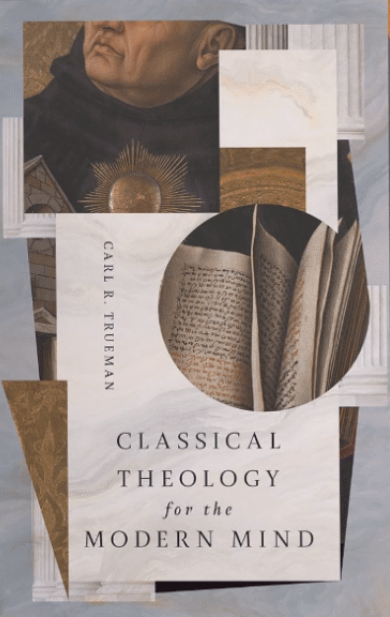
Carl R. Trueman, Classical Theology for the Modern Mind (Crossway, 2026).
In a slim volume of just 77 pages Carl Trueman has written a helpful introduction to an immense topic – Classical Theology and its relevance for modern Evangelical Christians. Classical Theology is the term coined to describe the historic teaching of the Christian Church about the attributes of God, the Trinity and the person of Christ. These doctrines were drawn from the Scriptures in the theological debates of the early Church, maintained through the Middle Ages, and agreed upon by Roman Catholics and Protestants through the bitter struggles of the Reformation. Only with the coming of the rationalism of the European Enlightenment and the rise of Liberal Protestantism in the nineteenth century was this theological consensus undermined.
Trueman argues that modern Evangelicalism has been more influenced by modernity and post-modernity than it cares to admit. His opening chapter summarises several pathologies of the modern evangelical mind. These include a biblicism which imagines that it upholds the Reformation principle of sola scriptura (but, in fact, bears an uncomfortable resemblance to the rationalism of the Socinians); a disparaging of the lessons which can be learned from previous generations; a pragmatism which values therapy over truth and which apes the world in its attempts it reach the world with the Gospel.
As a result of these pathologies the language of the great Creeds of the early Church and the Reformed Confessions sounds strange even to those who profess to adhere to them. Trueman defends this bold claim in his discussion of the doctrines of the Trinity and the person of Christ as stated in the Nicene Creed which, he argues, are grounded in the doctrines of divine simplicity, immutability and impassibility. By losing sight of these doctrines many Evangelical Christians have become vulnerable to the teachings such as Social Trinitarianism and the Eternal Functional Subordination of the Son.
One of the reasons which Trueman gives for these evangelical blind spots is that Evangelicals have, understandably, devoted more time and energy to defending biblical doctrines of Salvation (during and after the Reformation) and Scripture (in response to theological Liberalism), than to understanding and articulating Theology Proper and Classical Christology. Trueman insists that a sound understanding of the doctrine of God (what he calls “the ontic foundation of the gospel”) is just as important as a sound understanding of the authority of Scripture (or “the noetic foundation” of the Gospel).
In his chapter on the ecumenical implications of Classical Theology Trueman takes the discussion in a direction which will make some Evangelicals uncomfortable. He cites the example of John Owen who regarded the Socinians as enemies of the Christian faith, yet quoted approvingly from Roman Catholic theologians who articulated a classical doctrine of God. This, Trueman suggests, gives us reason to reassess how we relate to non-Protestants who hold to Classical Theism, as well as how we relate to professing Evangelicals who do not.
On a more positive note, readers will benefit from chapters which survey, succinctly and in an easily accessible way, recent scholarly work which has blown away the cobwebs and the myths around the theology of the Fathers, the Mediaeval scholastics, as well as the theologians of the Reformation and post-Reformation eras. Not every reader will readily identify the line which Truman draws from Thomas Aquinas to the Second London Baptist Confession. Nevertheless, the debt which those who drafted the great Reformed Confessions of the seventeenth century owed to pre-Reformation theology is immense.
The final chapters on the pastoral and devotional implications of Classical Theology alone make this book well worth reading. Trueman’s discussion of divine impassibility challenges the assumptions of many modern evangelicals that only a suffering God is able to comfort humanity in its pain. His chapter on the origins of Classical Theology in the worshipping community of God’s people demonstrates its relevance to the worship and prayers of God’s people today. Its potential of to enrich our language of prayer as well as our experience of God surely makes the historic doctrine of God a resource worth rediscovering.